


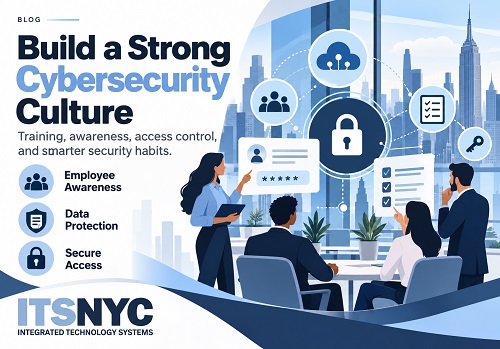
 Cybersecurity is no longer just an IT department responsibility. Every employee, manager, and business owner plays a role in protecting company information. As cybercriminals develop more sophisticated attacks, businesses need a workplace culture where security becomes part of daily operations.
For small-medium size businesses, building a strong cybersecurity culture means combining employee awareness, modern technology, clear policies, and ongoing risk management.
A cybersecurity culture is a workplace environment where employees understand security risks, follow established procedures, and actively protect company systems and sensitive information.
Why Is a Culture of Cybersecurity Important?
Cybercriminals frequently target employees because human error can create opportunities to bypass technical security controls. A compromised account, fraudulent payment request, or malicious email attachment can expose an organization to serious risks.
Cybersecurity incidents can lead to:
- Financial losses from fraud, ransomware, and interrupted operations.
- Data breaches involving confidential customer or employee information.
- Reputational damage that weakens customer confidence.
- Compliance issues and potential regulatory penalties.
- Lost productivity while systems and information are restored.
A strong security culture encourages employees to recognize suspicious activity and report concerns before they become major problems.
What Are the Biggest Business Security Threats in 2026?
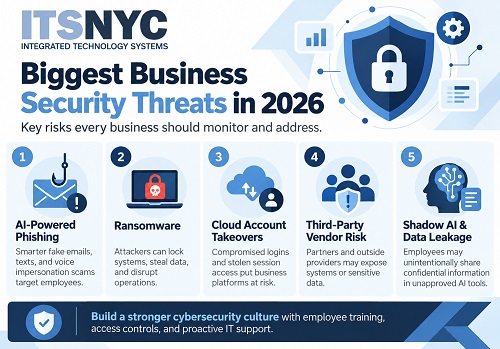 Cybersecurity threats continue to evolve. While traditional phishing emails and malware remain concerns, businesses must prepare for more advanced attacks.
AI-Powered Phishing and Social Engineering
Artificial intelligence allows cybercriminals to create convincing emails, text messages, and fraudulent communications. Attackers may also use AI-generated voices to impersonate executives or trusted vendors.
Employees should verify unexpected financial requests through a separate, trusted communication channel.
Ransomware and Data Theft
Ransomware attacks can encrypt company files, steal confidential information, and interrupt operations. Criminals may demand payment to restore access or prevent stolen information from being released.
Cloud and Account Security Risks
As businesses rely on cloud computing, Microsoft 365, and remote collaboration tools, protecting employee accounts becomes increasingly important.
Attackers may steal login credentials or session tokens to gain unauthorized access. Strong authentication and account monitoring help reduce these risks.
How Can Businesses Build a Security-First Workplace?
1. Provide Regular Cybersecurity Training
Employee education should extend beyond an annual presentation. Businesses should offer ongoing training covering:
- Recognizing phishing emails and suspicious attachments.
- Creating strong passwords and using password managers.
- Identifying AI-generated scams and impersonation attempts.
- Safely accessing business information remotely.
- Reporting suspicious activity immediately.
Short training sessions and realistic phishing simulations help employees recognize threats and develop safer habits.
2. Strengthen Authentication and Access Controls
Passwords alone are insufficient to protect business accounts.
Organizations should implement:
- Multifactor authentication (MFA) for email, financial applications, and cloud platforms.
- Phishing-resistant authentication, including passkeys or security keys where supported.
- Role-based access controls limiting access to necessary business information.
- Regular account reviews to remove unnecessary permissions.
These measures reduce the likelihood of unauthorized access to sensitive company systems.
3. Establish Clear Security Policies
Every organization should maintain written security policies addressing:
- Password management and account protection.
- Remote work and personal device usage.
- Confidential customer and employee information.
- Approved software and cloud applications.
- Procedures for reporting potential security incidents.
Policies should be reviewed regularly as technology and business operations change.
4. Protect Business Devices and Networks
Modern business security requires multiple protective measures, including:
- Firewalls and endpoint detection and response (EDR).
- Automated software updates and security patches.
- Device encryption and secure remote connections.
- Cloud application monitoring and permission reviews.
Businesses should also promptly remove system access when employees leave the organization.
5. Prepare for Ransomware and Business Disruptions
Even organizations with strong defenses need recovery plans.
Businesses should maintain protected backups, document emergency procedures, and test their ability to restore critical systems.
An effective incident response plan helps minimize downtime and provides employees with clear instructions during a security emergency.
6. Address AI and Third-Party Security Risks
Generative AI introduces additional data protection challenges. Employees may unintentionally expose confidential information by entering customer records or proprietary documents into unapproved AI platforms.
Businesses should establish acceptable-use policies for AI tools and regularly review the security practices of outside vendors with access to company information.
How Can Leadership Strengthen Cybersecurity Culture?
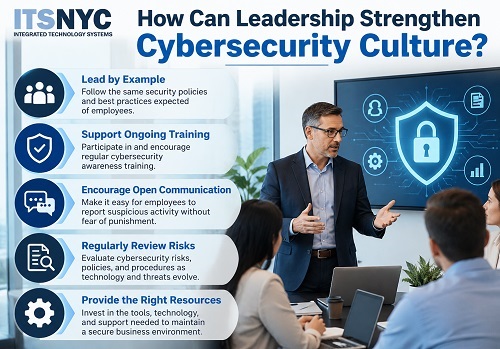 A successful cybersecurity culture begins with leadership.
Business owners and managers should:
- Follow the same cybersecurity policies expected of employees.
- Participate in ongoing security awareness training.
- Encourage immediate reporting of suspicious activity.
- Regularly review cybersecurity risks and procedures.
- Provide resources for improving business security.
When leadership demonstrates a commitment to security, employees are more likely to incorporate safe practices into daily operations.
How Can Integrated Technology Systems Help?
Building a strong security culture requires more than cybersecurity software. Businesses need effective technology, employee awareness, and ongoing professional support.
Integrated Technology Systems helps small-medium businesses strengthen network security, protect sensitive information, identify vulnerabilities, and improve their overall cybersecurity posture.
Through professional IT services, proactive monitoring, and data security solutions, Integrated Technology Systems helps organizations address evolving cyber threats while maintaining reliable operations.
Contact Integrated Technology Systems today to learn how your business can improve cybersecurity protection and create a safer, more secure workplace.
Integrated Technology Systems
6 East 45th Street, Suite 400
New York, NY 10017
212-750-5420
https://www.itsnyc.com


