


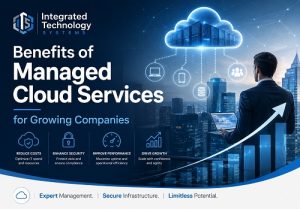
 As a company grows, its technology needs often become harder to manage. More employees, larger data volumes, new software, remote work, and stronger security requirements can place added pressure on internal IT resources. Managed cloud services give growing companies a practical way to expand their technology without building and maintaining every system on their own.
Integrated Technology Systems helps businesses use cloud technology more effectively. With professional management, monitoring, and cloud support, companies can improve performance, reduce downtime, strengthen security, and prepare their systems for future growth.
What Are Managed Cloud Services?
Managed cloud services involve working with an experienced technology provider to oversee some or all of a company’s cloud environment. The provider may help manage cloud servers, storage, software, backups, user access, cybersecurity, and system performance.
Instead of leaving cloud management entirely to an internal team, a business gains ongoing assistance from specialists who understand cloud infrastructure. The exact services can vary based on the company’s size, goals, applications, and compliance requirements.
A managed provider may assist with:
- Cloud system design and setup
- Data storage and backup management
- Security monitoring
- Software updates and patching
- Performance optimization
- User access controls
- Disaster recovery planning
- Technical troubleshooting
This approach allows business leaders to focus on operations while trained professionals manage the technical details.
Easier Scalability as the Business Grows
Growing companies often experience changing technology demands. A business may add employees, open new locations, launch new services, or begin serving more customers. Traditional on-site infrastructure can make these changes expensive and time-consuming.
Cloud environments allow businesses to increase or decrease computing resources based on current needs. Companies can add storage, processing capacity, applications, and user accounts without purchasing a large amount of new hardware.
Managed cloud services make this process easier by helping businesses plan and complete these changes correctly. A provider can evaluate usage, recommend suitable resources, and adjust the environment before performance problems develop.
This flexibility helps prevent businesses from paying for systems they do not need while still providing room for future expansion.
More Predictable Technology Costs
Managing physical servers and other on-site equipment can create unexpected expenses. Hardware can fail, software licenses may change, and emergency repairs can disrupt a company’s budget.
Cloud solutions often use a subscription or usage-based pricing model. This structure can make technology spending easier to predict. A managed provider can also review the cloud environment and identify resources that are unused, oversized, or no longer necessary.
Companies may reduce costs related to:
- Server purchases
- Hardware maintenance
- Equipment replacement
- On-site data storage
- Software upgrades
- Emergency technical repairs
Although cloud technology does not eliminate every IT expense, it can provide greater visibility and control. Integrated Technology Systems can help businesses choose services that match their operational requirements and financial goals.
Stronger Security and Ongoing Monitoring
Cybersecurity becomes increasingly important as a company stores more information and connects more employees to its systems. Growing businesses may also become more attractive targets for phishing, ransomware, account theft, and other cyber threats.
A managed provider can apply security controls across the cloud environment. These controls may include multifactor authentication, encryption, firewall management, access restrictions, threat detection, and security updates.
Ongoing monitoring can also help identify suspicious activity before it causes significant damage. Automated alerts and professional review allow the provider to respond quickly when a potential problem appears.
Security needs can vary by industry. Companies that manage financial, medical, customer, or employee information may also have specific compliance responsibilities. Professional cloud support can help businesses create stronger policies and maintain better control over sensitive data.
Reduced Downtime and Better Reliability
Technology downtime can affect customer service, productivity, sales, and communication. Even a short outage may prevent employees from accessing important files or using essential business applications.
Managed cloud environments often include performance monitoring and maintenance designed to reduce disruptions. Providers can watch for storage limits, unusual traffic, software conflicts, failed backups, and other warning signs.
If an issue occurs, technicians can begin troubleshooting without waiting for employees to identify the source of the problem. This faster response can shorten interruptions and help protect business continuity.
Providers may also build redundancy into the environment. Redundant systems keep copies of data or services in more than one location. If one resource fails, another may continue supporting operations.
Reliable Data Backup and Disaster Recovery
Every growing company needs a plan for protecting its information. Hardware failure, human error, cyberattacks, power outages, and severe weather can all cause data loss.
Cloud-based backups store copies of important data away from the company’s primary equipment. Managed services can automate the backup process, check that backups complete successfully, and test whether information can be restored.
A disaster recovery plan goes beyond creating copies of files. It outlines how the company will restore systems, applications, communications, and data after a major disruption.
A managed provider can help establish:
- Backup schedules
- Data retention rules
- Recovery priorities
- Recovery time goals
- Off-site storage procedures
- System restoration testing
Regular testing is important because an untested backup may not work when the business needs it most.
Better Support for Remote and Hybrid Employees
Many companies now employ people who work from home, travel regularly, or divide their time between several locations. Cloud systems allow authorized employees to access files and applications from almost anywhere with a secure internet connection.
Managed cloud services help businesses create a consistent work environment for these employees. Providers can configure secure access, manage user permissions, support collaboration tools, and help protect company devices.
Centralized access also makes it easier for teams to share current information. Employees can work from the same files instead of creating multiple versions on individual computers.
Reliable cloud support is especially valuable when remote employees encounter login problems, software errors, or access restrictions. Prompt assistance helps reduce lost work time and frustration.
Access to Specialized Cloud Expertise
Cloud platforms include many settings, tools, security options, and pricing structures. Internal IT employees may not have enough time to monitor every change or develop expertise in every area.
A managed provider gives a company access to professionals with experience in cloud infrastructure, cybersecurity, networking, backups, and business continuity. This knowledge can help companies avoid configuration mistakes and select technologies that fit their operations.
Integrated Technology Systems can also work alongside an existing internal IT team. Instead of replacing employees, a managed provider can handle routine maintenance, specialized projects, or after-hours monitoring. This arrangement allows the internal team to focus on strategic business priorities.
Faster Technology Deployment
Growing companies often need to introduce new applications, create user accounts, increase storage, or support a new office quickly. Purchasing and installing physical equipment can delay these projects.
Cloud resources can often be deployed much faster. A managed provider can plan the setup, configure the environment, test connections, and verify security before users begin working.
Faster deployment allows businesses to respond to customer demand and operational changes without waiting for lengthy hardware installations. It can also make business acquisitions, office moves, and employee onboarding easier to manage.
Improved Employee Productivity
Slow systems, repeated outages, and unresolved technical issues can prevent employees from completing their work. Managed cloud environments can improve productivity by giving users dependable access to the tools and information they need.
Automatic updates and centralized management also reduce the burden on employees. Instead of installing software or maintaining local files, team members can spend more time on customers, projects, and daily responsibilities.
The right cloud environment can support communication, file sharing, project management, accounting, customer relationship management, and other essential business functions.
Strategic Planning for Long-Term Growth
Cloud management should involve more than solving immediate technical problems. A qualified provider can also help a business prepare for future needs.
Technology planning may include reviewing system performance, estimating future storage requirements, identifying security risks, and creating a timeline for application upgrades. Regular planning helps prevent rushed decisions and unexpected costs.
As the company grows, its cloud strategy can grow with it. Businesses may begin with cloud backups or file storage and later add hosted applications, virtual servers, advanced security, or full disaster recovery systems.
Choose Managed Cloud Services That Fit Your Business
Not every company needs the same cloud setup. The best solution depends on the business’s size, industry, workforce, applications, security concerns, and growth plans.
Integrated Technology Systems helps companies evaluate their current environment and develop a cloud strategy that supports daily operations and long-term goals. A managed approach can provide better security, stronger reliability, predictable costs, and professional technical guidance.
Call Integrated Technology Systems to discuss how managed cloud services can support your growing company and create a more flexible technology environment.
Integrated Technology Systems
6 East 45th Street, Suite 400
New York, NY 10017
212-750-5420
https://www.itsnyc.com


