


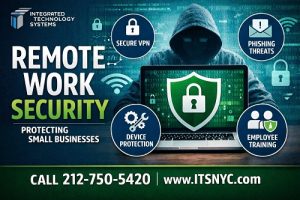
 Remote work has transformed how companies operate, but it has also introduced new vulnerabilities that many organizations underestimate. Remote Work Security is now one of the most critical cybersecurity concerns for small business owners trying to protect sensitive data, maintain compliance, and avoid costly breaches. Without the right safeguards in place, remote environments can become an easy entry point for cybercriminals.
Why Remote Work Security Is a Growing Cybersecurity Concern
The shift to remote work means employees are no longer protected by centralized office networks. Instead, they rely on home Wi-Fi, personal devices, and cloud-based tools. This creates multiple access points that attackers can exploit.
Common risks include:
- Unsecured home networks
- Weak or reused passwords
- Lack of device monitoring
- Increased phishing attacks
- Unauthorized access to company systems
For small business cybersecurity, these risks can lead to data loss, financial damage, and reputational harm.
Remote Work Security Risks Every Small Business Should Know
Understanding the specific threats tied to Remote Work Security is the first step toward building a stronger defense strategy.
1. Unsecured Networks
Employees working from home often use personal Wi-Fi networks that lack enterprise-level protection. Hackers can intercept data transmitted over unsecured connections.
2. Device Vulnerabilities
Personal laptops, tablets, and smartphones may not have updated security patches or antivirus software, making them easy targets.
3. Phishing and Social Engineering
Remote workers are more likely to fall victim to phishing emails due to reduced IT oversight and increased reliance on digital communication.
4. Weak Access Controls
Without proper authentication protocols, unauthorized users may gain access to sensitive systems.
How Remote Work Security Impacts Small Business Cybersecurity
Small businesses are especially vulnerable because they often lack dedicated IT teams or advanced security infrastructure. A single breach tied to poor Remote Work Security can result in:
- Loss of customer trust
- Regulatory penalties
- Downtime and operational disruption
- Financial losses from ransomware or fraud
Cybersecurity concerns are no longer just an IT issue—they are a business survival issue.
Best Practices to Strengthen Remote Work Security
 Improving Remote Work Security doesn’t have to be complicated. With the right approach, small businesses can significantly reduce their risk.
Implement Multi-Factor Authentication (MFA)
Require employees to verify their identity using more than just a password. This adds an extra layer of protection.
Use Secure VPNs
A Virtual Private Network encrypts internet connections, keeping data safe even on public or home networks.
Enforce Strong Password Policies
Encourage:
- Unique passwords for every account
- Regular password updates
- Use of password managers
Keep Software Updated
Ensure all devices and applications are regularly updated to protect against known vulnerabilities.
Provide Employee Training
Educate your team on recognizing phishing attempts and following cybersecurity best practices.
Remote Work Security Tools That Make a Difference
Investing in the right tools can simplify and strengthen your security strategy:
- Endpoint protection software
- Cloud security solutions
- Remote monitoring and management (RMM) tools
- Secure file-sharing platforms
These tools help create a safer remote environment while maintaining productivity.
Building a Remote Work Security Strategy That Works
A proactive approach to Remote Work Security is essential. Businesses should:
- Conduct regular security assessments
- Develop clear remote work policies
- Monitor network activity continuously
- Backup critical data regularly
By taking these steps, companies can stay ahead of evolving cybersecurity threats.
Partner With Experts for Better Protection
Managing cybersecurity concerns on your own can be overwhelming. That’s where Integrated Technology Systems comes in. With expertise in small business cybersecurity, Integrated Technology Systems helps organizations implement effective Remote Work Security solutions tailored to their needs.
From securing remote networks to training employees and monitoring systems, Integrated Technology Systems provides comprehensive support to keep your business protected.
Take Action to Secure Your Remote Workforce
Don’t wait for a cyber incident to expose weaknesses in your system. Strengthening Remote Work Security today can save your business from costly consequences tomorrow.
Call Integrated Technology Systems at 212-750-5420 or visit [https://www.itsnyc.com](https://www.itsnyc.com) to schedule a cybersecurity assessment and protect your remote workforce with confidence.
Integrated Technology Systems
6 East 45th Street, Suite 400
New York, NY 10017
212-750-5420
https://www.itsnyc.com


