


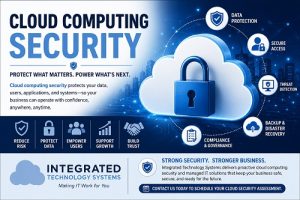
 Businesses of every size rely on cloud technology to store files, run applications, collaborate with employees, and serve customers. While cloud platforms offer flexibility, scalability, and cost savings, they also introduce new security challenges. Cloud computing security is no longer optional—it is an essential part of protecting your business from cyber threats, data breaches, and costly downtime.
At Integrated Technology Systems, we help organizations build secure, reliable technology environments that protect sensitive information while supporting business growth. Whether your business uses Microsoft 365, cloud-based accounting software, customer databases, or remote collaboration tools, understanding cloud security fundamentals is the first step toward stronger protection.
What Is Cloud Computing Security?
Cloud computing security refers to the policies, technologies, controls, and best practices used to protect cloud-based systems, applications, networks, and data from cyber threats. It includes every measure designed to keep information confidential, maintain system integrity, and ensure authorized users have secure access to business resources.
Unlike traditional on-premises servers, cloud environments often involve shared responsibilities between the cloud provider and the customer. While providers secure the infrastructure, businesses remain responsible for protecting user accounts, data, configurations, and access permissions.
As a result, effective cloud security requires more than simply choosing a reputable cloud provider. Businesses must actively manage their own security practices.
Why Every Business Needs Cloud Computing Security
Many small and medium-sized businesses assume cybercriminals only target large corporations. In reality, attackers frequently target smaller organizations because they often have fewer security resources.
Without proper cloud computing security, businesses may face:
- Data breaches
- Ransomware attacks
- Account takeovers
- Financial losses
- Regulatory penalties
- Lost customer trust
- Extended business downtime
Even a single compromised employee password can expose sensitive company information if additional security controls are not in place.
Strong business cybersecurity reduces these risks while helping organizations maintain daily operations.
The Shared Responsibility Model in Cloud Computing Security

hybrid cloud solution
One of the biggest misconceptions about cloud services is believing the provider handles all security.
In reality, cloud providers typically protect:
- Physical data centers
- Hardware infrastructure
- Core networking
- Cloud platform availability
Businesses remain responsible for protecting:
- Employee passwords
- User permissions
- Sensitive business data
- Device security
- Software updates
- Security settings
- Backup policies
Understanding this shared responsibility model helps organizations avoid dangerous security gaps.
Common Threats to Cloud Security
Modern cybercriminals constantly develop new attack methods. Fortunately, understanding common threats allows businesses to prepare before an incident occurs.
Some of today's most common cloud security risks include:
Phishing Attacks
Attackers send convincing emails that trick employees into revealing passwords or approving fraudulent login requests.
Weak Passwords
Simple or reused passwords remain one of the easiest ways for attackers to gain unauthorized access.
Misconfigured Cloud Settings
Improper permissions or publicly exposed storage can accidentally make confidential information accessible to anyone.
Ransomware
Cybercriminals encrypt business data and demand payment for its release. Cloud-connected devices can become entry points if not properly secured.
Employees or contractors with excessive permissions may accidentally—or intentionally—expose sensitive information.
Essential Layers of Cloud Security Protection
Effective cloud protection relies on multiple layers rather than a single security product.
Businesses should implement:
- Multi-factor authentication (MFA)
- Strong password policies
- Role-based access controls
- Data encryption
- Endpoint protection
- Continuous security monitoring
- Regular vulnerability assessments
- Secure cloud backups
- Employee cybersecurity training
When these protections work together, businesses significantly reduce their exposure to cyber threats.
How Cloud Computing Security Supports Business Cybersecurity
 Modern organizations rarely operate entirely from one office. Employees work remotely, travel frequently, and access company systems using multiple devices.
Strong cloud computing security supports broader business cybersecurity by protecting:
- Remote employees
- Mobile devices
- Cloud applications
- Shared documents
- Customer databases
- Financial records
- Internal communications
Instead of creating barriers to productivity, secure cloud environments enable employees to work safely from virtually anywhere.
Best Practices for Improving Cloud Security
Businesses can strengthen their security posture by following several proven best practices.
Enable Multi-Factor Authentication
MFA adds another verification step beyond passwords, making unauthorized access much more difficult.
Limit User Access
Employees should only access the information necessary for their job responsibilities.
Keep Software Updated
Regular updates close known security vulnerabilities before attackers can exploit them.
Monitor User Activity
Security monitoring helps detect unusual login behavior, suspicious downloads, or unauthorized access attempts.
Backup Critical Data
Reliable backups allow organizations to recover quickly after ransomware attacks, accidental deletions, or hardware failures.
Train Employees Regularly
Human error remains one of the leading causes of cybersecurity incidents. Ongoing training helps employees recognize phishing emails, suspicious links, and social engineering attacks.
Signs Your Business May Have Cloud Security Gaps
Many businesses do not realize they have security weaknesses until after an incident occurs.
Warning signs include:
- Employees sharing passwords
- No multi-factor authentication
- Unused accounts remaining active
- Limited backup testing
- No security monitoring
- Outdated software
- Excessive administrator privileges
- No documented cybersecurity policies
Addressing these issues early can prevent significant financial and operational damage.
How Integrated Technology Systems Helps Protect Your Business
At Integrated Technology Systems, we understand that every organization has unique technology requirements. Rather than offering one-size-fits-all solutions, we design customized cloud computing security strategies that align with your business goals, regulatory requirements, and risk profile.
Our professional IT services include:
- Cloud security assessments
- Managed IT services
- Managed security solutions
- Microsoft 365 security management
- Multi-factor authentication implementation
- Endpoint protection
- Network monitoring
- Data backup and disaster recovery
- Cybersecurity awareness training
- Ongoing security monitoring and support
Our proactive approach helps businesses reduce risk, improve compliance, and maintain secure access to their critical systems every day.
Build a Stronger Security Foundation Today
Cloud technology has transformed how businesses operate, but it has also changed the cybersecurity landscape. Investing in cloud computing security is one of the smartest decisions any organization can make. By combining secure technology, proactive monitoring, employee education, and expert IT support, businesses can significantly reduce cyber risks while confidently embracing digital transformation.
If you're unsure whether your current cloud environment is properly protected, now is the ideal time to evaluate your security posture before a cyberattack exposes costly vulnerabilities.
Contact Integrated Technology Systems
Protect your business with proactive cloud security solutions from Integrated Technology Systems. Our experienced team provides managed IT services, managed security, cloud protection, disaster recovery planning, and comprehensive cybersecurity solutions designed to keep your business running safely and efficiently.
Contact us today to schedule a cloud security assessment and discover how we can strengthen your organization's cybersecurity from the cloud to the endpoint.
Integrated Technology Systems
6 East 45th Street, Suite 400
New York, NY 10017
212-750-5420
https://www.itsnyc.com


